
Thief Hall

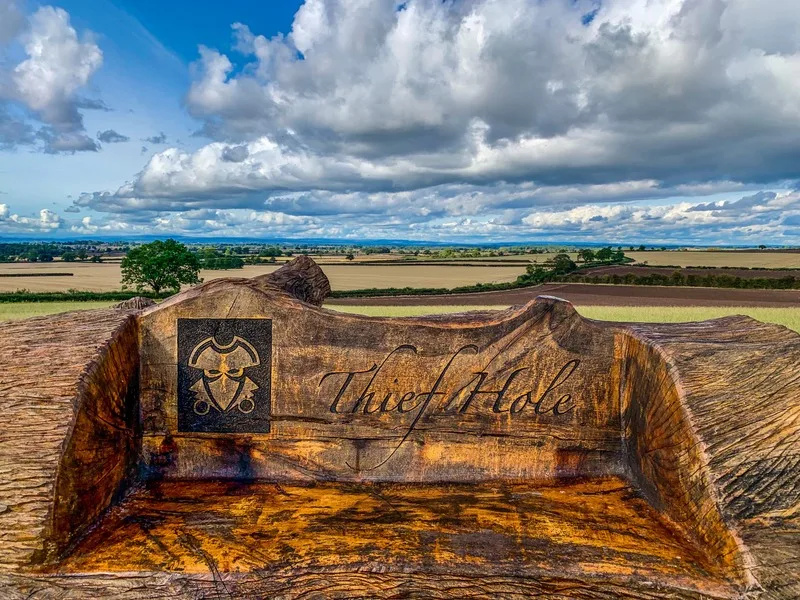
Carved wooden Thief Hole bench overlooking the countryside at Thief Hall

THE LOVE STORIES

The Story of Thief Hole Lane

THIEF HOLE LANE

The lane had its name before 1657. The legend says thieves hid beside the old road and waited for coaches. The dates say the name came first.

Thief Hole Lane has been known by this name since before 1657. Local rumours have it that many years ago the A168 was the main London to Edinburgh road. This ran right past Thornton Le Moor (then known as Thornton Le Mora) and used Thirsk and Northallerton as coach resting towns. With so much opportunity, the thieves would use the large hole at the end of Thief Hole Lane to hide in where they would be ready to hold up the coaches as they passed through. Thus giving us the name Thief Hole Lane.

Unfortunately, when studying the local history of Northallerton and Thornton Le Moor, there are discrepancies.

It is thought that prior to 1100AD the A168 was recognised as the main London to Edinburgh road with Northallerton largely owing it's development to this fact. It was only later that the A1 took over as a main route, with the A168 remaining very popular as it joined York to Edinburgh.

However, the simple fact that stage coaches did not start running until 1763 means that Thief Hole Lane was named before the stage coach era. Thus, such rumours must be a fairytale ... Or ... has this always just been a dangerous pathway?
Behind the names

The stories of our cottages

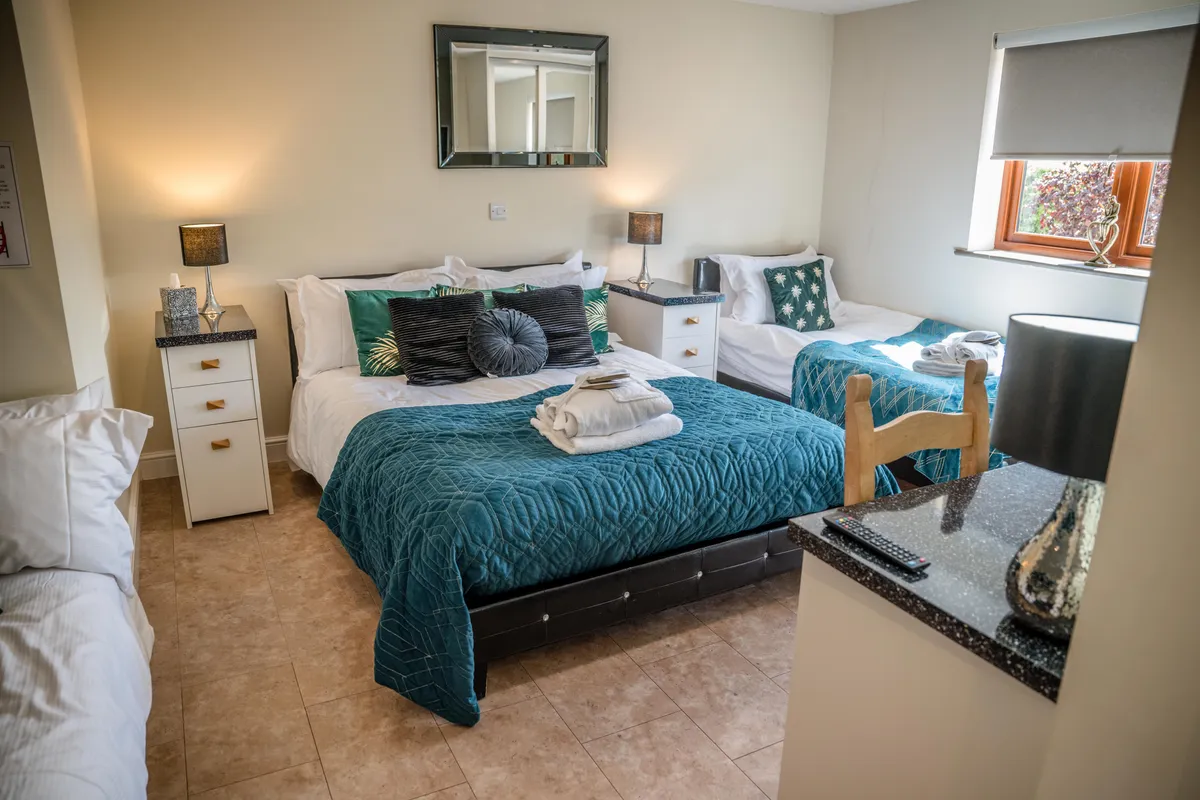
Bedroom with teal bedding in Millington House

Millington House

We all know about the famous Richard (Dick) Turpin, but who was he married to?

The answer is Elizabeth (Betty) Millington.

Dick & Betty were childhood sweethearts and married in 1728, two years later in 1730, Betty gave birth to their first and only child, a daughter who they named Elizabeth Turpin.

Some stories indicate he reputedly married a local girl called Miss Palmer although there is no evidence of this.

Dick had an apprenticeship as a butcher in Whitechapel, when this ended, Dick, Betty, and their daughter Elizabeth moved to Buckhurst Hill in Essex where he opened his own butchers shop following his family trade.

It is doubtful that Dick and Betty spent much time together in the future years due to his involvement in an Essex gang and what he got up to, which of course is famous!

Dick Turpin was tried and executed in Knavesmire, York on 7th April 1739.

Read the story of Millington House

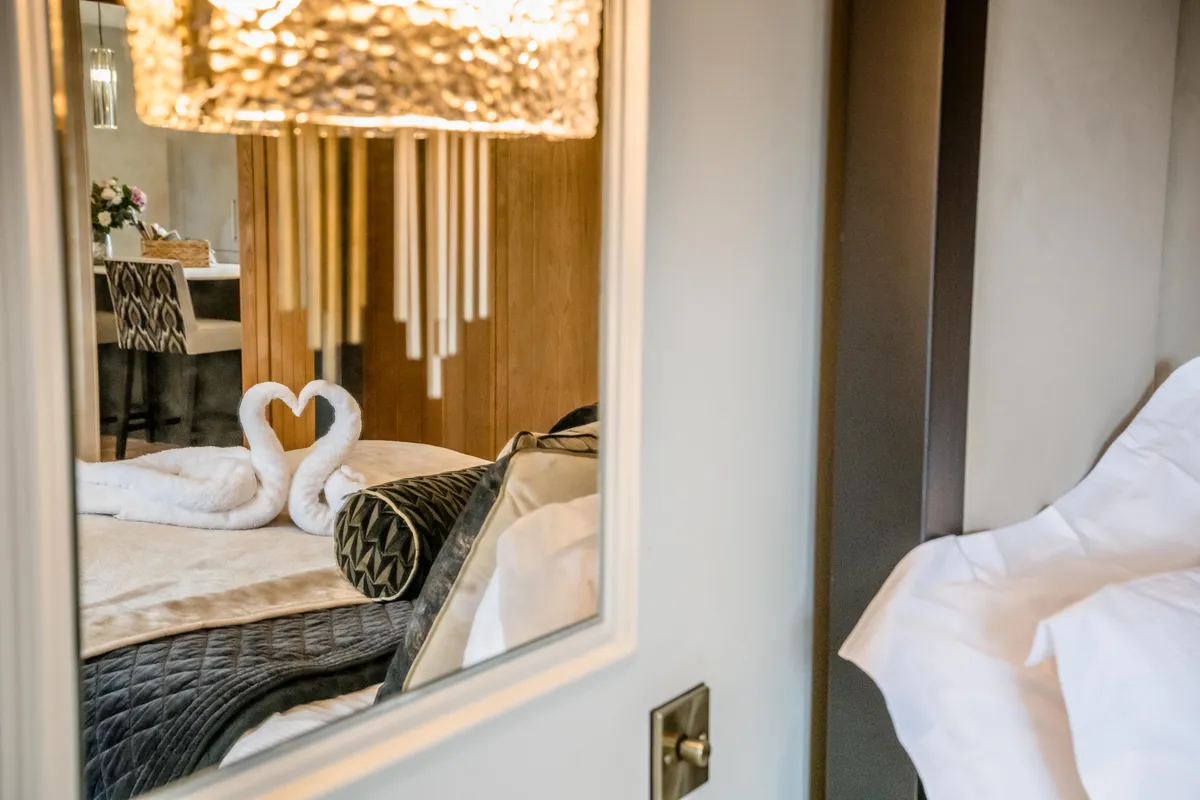
The bed reflected in a mirror in Bateman Byre

Bateman Byre

Mary Bateman, the famous Yorkshire witch was born Mary Harker in Asenby, 1768 and from an early age was a thief and a liar. As well as working as a domestic, she made extra money as a fortune teller preying on people who believed she had supernatural powers. Later she moved to Leeds and became a dressmaker as she had been sacked from so many jobs in her local area and no one would trust or employ her. Aged 24, Mary married John Bateman, a wheelwright. They moved around a lot as her schemes were becoming so prevalent, her victims grew wise to her thievery.

During 1806 Mary met a married couple, William & Rebecca Perigo. Rebecca had complained of chest pains and thought a curse had been put on her and hoped Mary could help with her ‘supernatural powers’. Taking advantage of this, Mary swindled the Perigo's out of a large amount of money in a very short space of time. Convincing them that she was in the service of an oracle called Mrs Blythe, who possessed the power to see into the Perigos future. Mary began to poison the Perigos with mercury chloride. She told William & Rebecca that Mrs Blythe had sent a letter, via Mary, instructing them to eat a certain pudding for several days, so on the 11th May, Mary started to feed them her deadly concoction. Rebecca ate all the pudding, as instructed, but William could only eat half and soon they both became extremely ill. Mary then gave them an antidote, but unfortunately for the couple, this turned out to be arsenic. As William hadn't eaten a lot of the pudding he slowly recovered but Rebecca became gravely ill and eventually died on 24th May 1806.

Mary Bateman was ultimately caught via her web of treachery and schemes. Mr Perigo had contacted a local constable who then arrested her based mostly on her reputation. She was convicted of murder and sentenced to hang on 20th March 1809.

Read the story of Bateman Byre

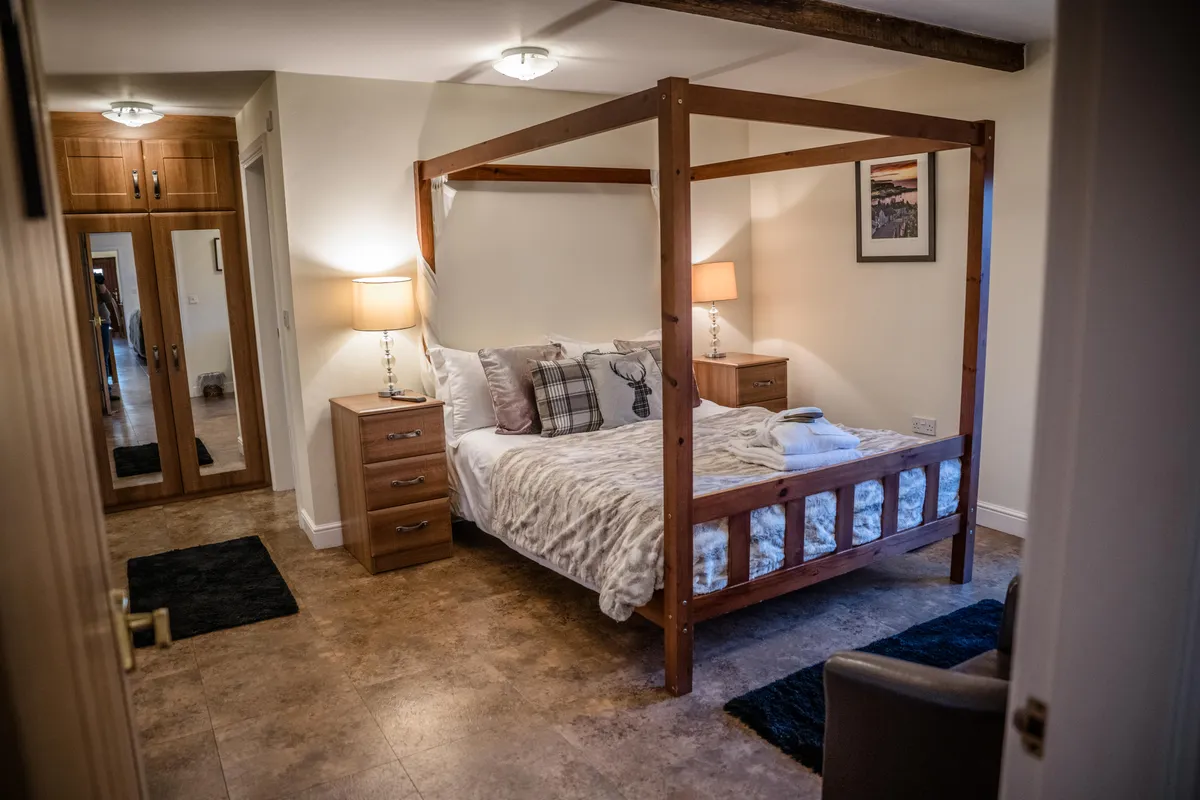
Wooden four-poster bed in Swift Nick Cottage

Swift Nick Cottage

Swift Nick was next and the last of the criminals to find a place within our cottages. 'Swift Nick' had various names, William or John Nevison, whose real name was John Brace or Bracey. He was the last obvious choice as he also had connections with Yorkshire.

John Bracey was born at Worley near Pontefract, Yorkshire in 1639, the son of a wealthy wool merchant. At an early age Nevison became a thief, even robbing his own family and schoolmaster. Nevison earned the nickname 'Swift Nick' after a remarkable exploit in May 1676. Following a robbery at Gad's Hill in Kent, at 4 a.m. he rode to the city of York, arriving at 7pm on the same day. The distance travelled around 200 miles, taking around fifteen hours to complete. After his arrival in York, Nevison stabled his horse, changed clothes and set off to the bowling green where he had an established alibi for the crime.

During the following century the infamous Dick Turpin and his horse Black Bess were fictitiously credited with the astonishing ride from London to York, actually accomplished by 'Swift Nick' which no history book can determine why.

Nevison's luck finally deserted him and he was arrested and taken to York Castle where he was sentenced to death and executed on 15th March 1684. The following day he was buried at St Mary's Church, Castlegate, York.

Read the story of Swift Nick Cottage

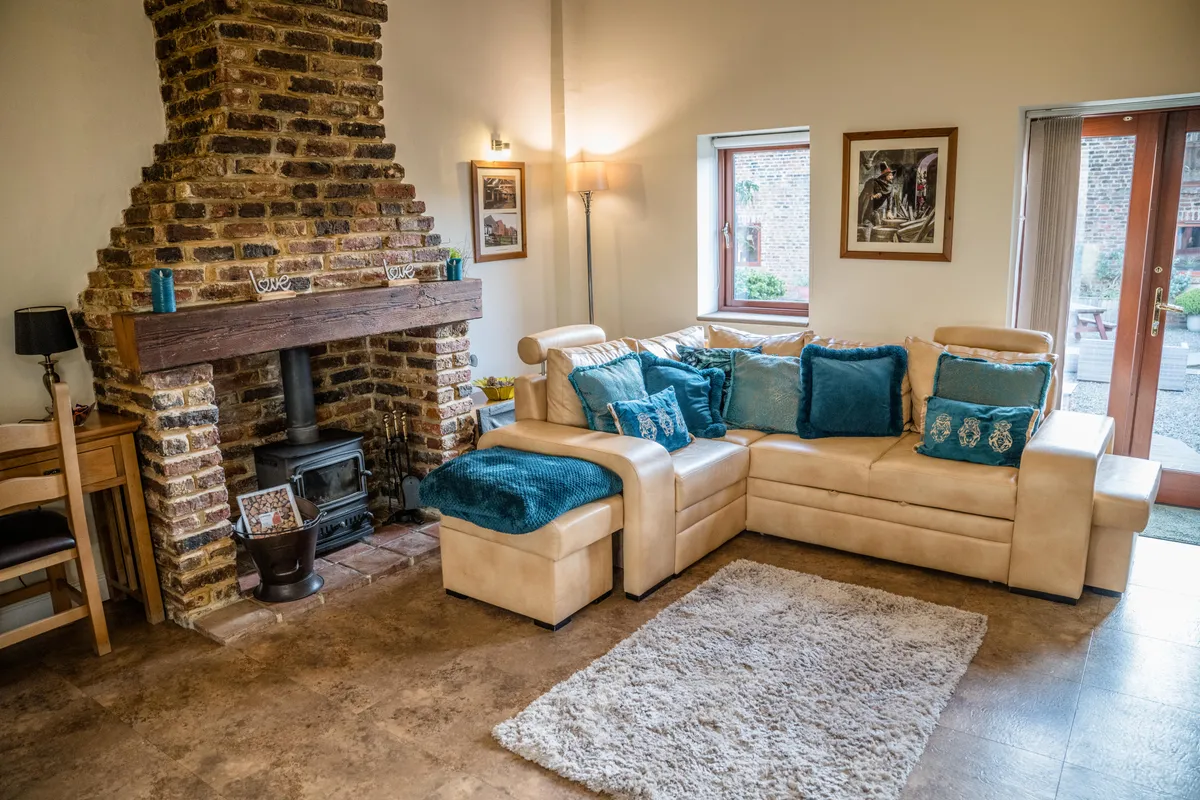
A stone fireplace and sofa in Fawkes Cottage

Fawkes Cottage

Fawkes was the next cottage to receive its name, again named after a famous criminal with strong connections to York. Guy Fawkes was born in York on April 13th 1570 at Youngs Hotel, a place which can still be visited to this day. Fawkes was the only son of Edward Fawkes a Protestant and Edith Blake, a Catholic. When Guy was nine years old his father died and Guy's mother remarried a Catholic, thus Guy became Catholic also.

Guy attended St Peter's School in York where he met fellow students John and Christopher Wright, both of whom would be among the conspirators of the Gunpowder Plot.

Fawkes is believed to have left England in 1593 for Flanders here he enlisted in the Spanish Army, and later travelled to live in Spain which was a country run under the strong Catholic leader Phillip I. In 1604 Guy Fawkes returned to England with the sole purpose to plot against James 1st who was a Protestant leader and unfair to the Catholic people of England which Guy felt strongly about. In May 1604, the leader of the Gunpowder Plot, Robert Catesby, held a secret meeting with five men to organise the murder of King James which was to take place when the new parliament was due to open in 1605. By March 1605 there were thirteen men organised to help with the plot and a storeroom was rented under the House of Lords which was filled with thirty-six barrels of gunpowder and hidden under firewood. On November the 5th 1605 The Houses of Parliament and surrounding buildings were searched, the Gunpowder was found and Guy Fawkes was captured. After being tortured and several of the other plotters were found, Guy Fawkes was hung, drawn and quartered on January 31st 1606.

Read the story of Fawkes Cottage

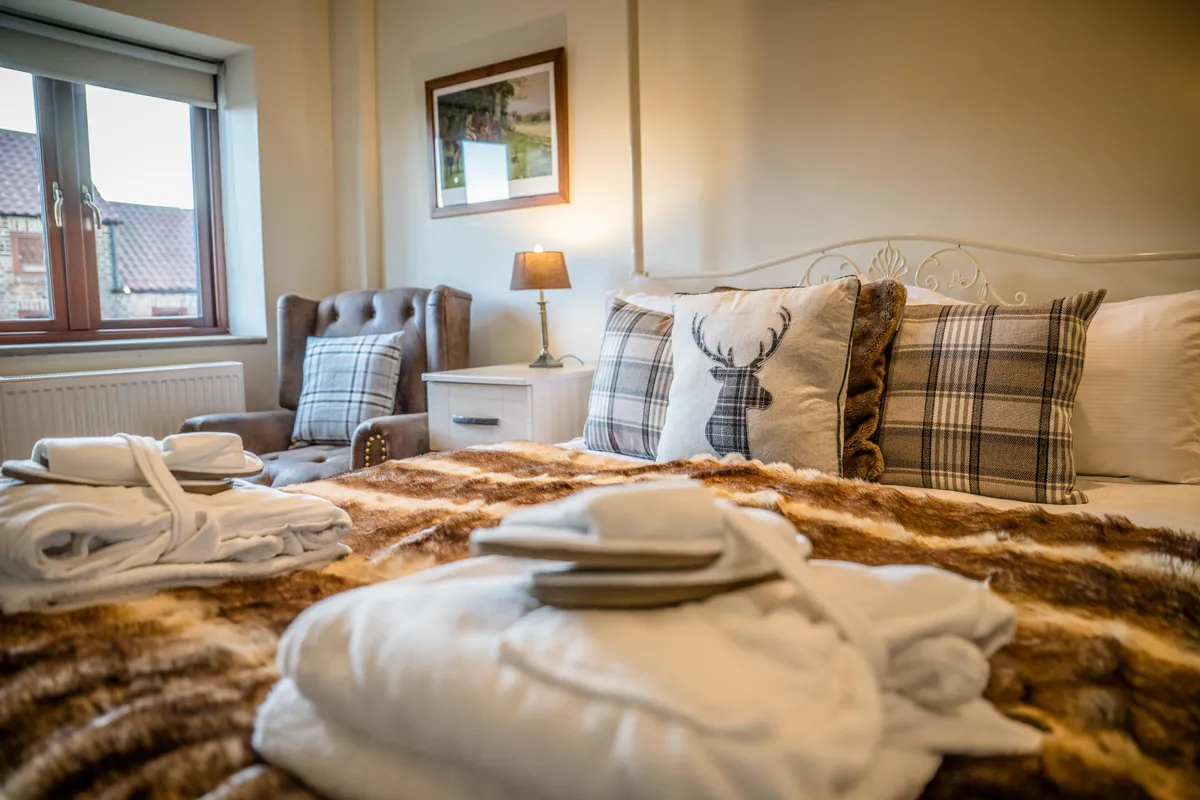
Bedroom with a pale metal bed and stag cushion in Turpin Cottage

Turpin Cottage

Turpin was the first cottage to receive its name. What better way to keep the fairytales alive than to follow Dick Turpin, probably the most famous highwayman that ever lived and with his connections to York what better choice?

Richard Turpin, son of John and Mary Turpin was born in Essex in 1705. It was intended that Turpin was to follow the family trade and become a butcher, but as we all know he had other plans and joined an Essex gang who invaded isolated farmhouses. To escape capture Turpin is known to have relocated to Yorkshire, famously riding from London to York in less than 24 hours on his horse Black Bess.

Factually this is not true...it was another highwayman, Swift Nick who actually did this ride and it is not known why Dick Turpin takes the credit for this amazing gallop with his famous black horse. It is also not actually known when Dick Turpin arrived in York but it is said that he took his time travelling up the country before settling under the name of John Palmer. After leading an exciting life of crime Dick Turpin found himself being paraded around the streets of York in an open cart before he was executed at York racecourse for horse stealing on Saturday 7th April 1739.

Read the story of Turpin Cottage

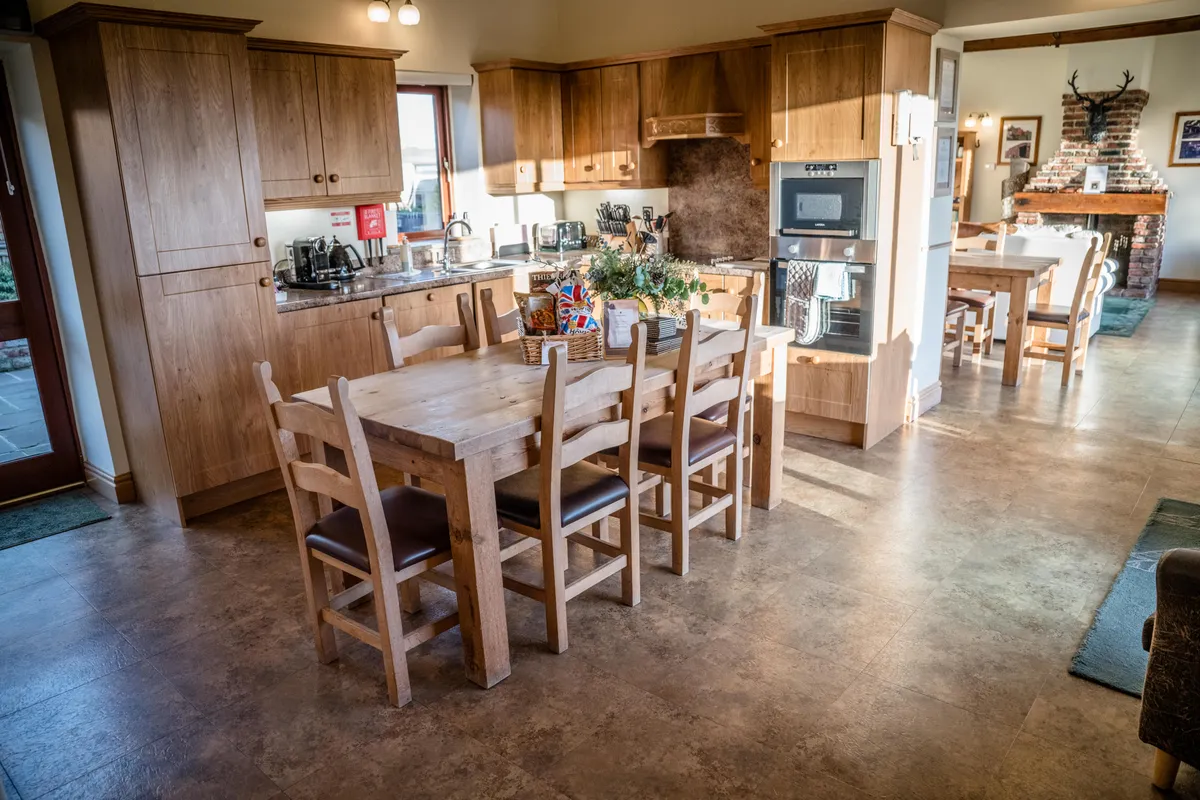
The kitchen and dining table looking through to the fireplace in Thief Hole Barn

Thief Hole Barn

The final cottage to receive its name was Thief Hole Barn.

This was the last of the four cottages to be completed and the largest. The perfect place for any group to hideaway! You never know Dick Turpin may have stolen from local farmers in this area, Swift Nick may have hidden in the hole at the end of Thief Hole Lane and shouted "Stand and Deliver" in front of a large stage coach on its way to Northallerton, or Guy Fawkes may have passed through at some point, who is to say for certain?

We hope you have enjoyed the little piece of history added to the cottages even if they are of necessity, unproven. We believe it is fun and exciting to keep the stories alive…

Read the story of Thief Hole Barn

ENQUIRE

Tell us about your day.

Fill in this enquiry form with your details, and we will send you a little more information about Thief Hall!

361 reviews across three platformsGoogle 4.8 from 220 reviews

An approximate date is fine.

Opens in a new tab