
THE MEANING
The meal after the ceremony.
Cambridge Dictionary defines a wedding breakfast as the meal that forms part of a marriage celebration after the ceremony, at any time of day. Oxford gives the same practical meaning: a special meal after a marriage ceremony. It can therefore be served in the afternoon or evening and still carry the traditional name.
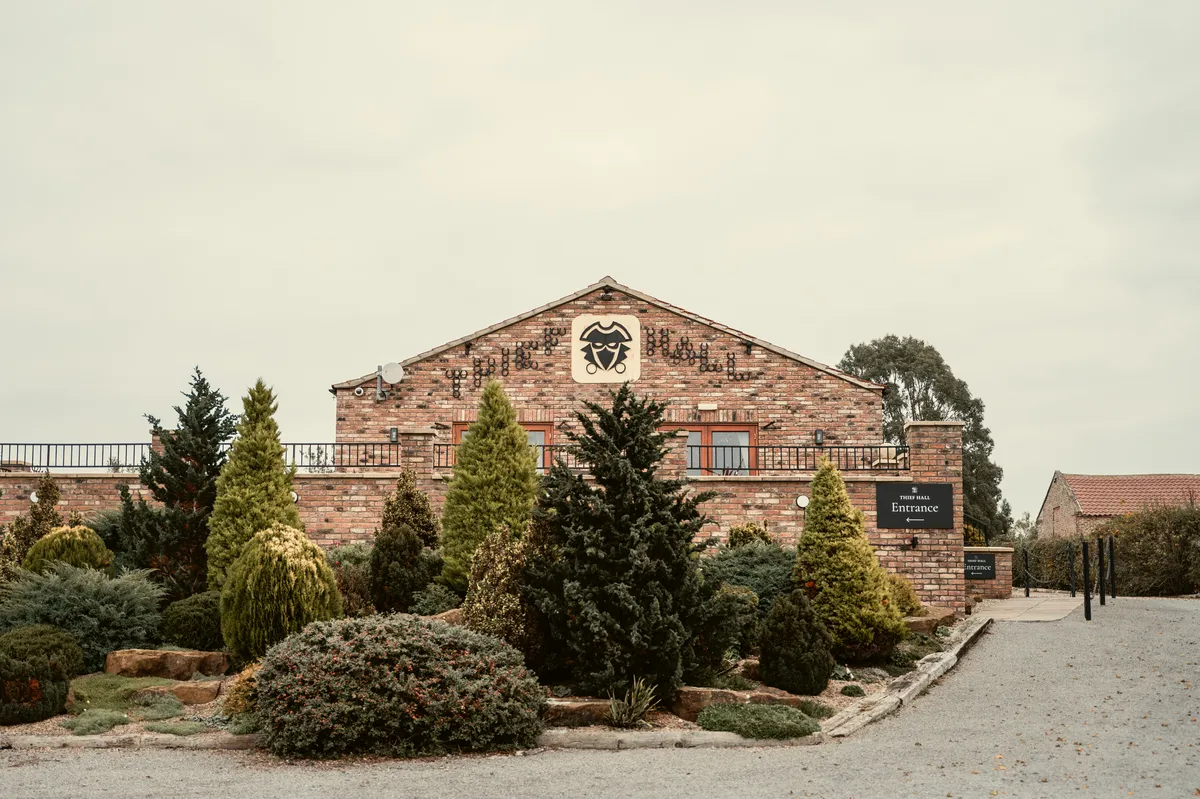
Its place in the day is what matters. It is the first meal the married couple share after the ceremony, usually with the people who have gathered to witness it. At Thief Hall, the typical running order places the wedding breakfast at about 5pm, after the ceremony, drinks and photographs.
THE NAME
Why is it called a breakfast?
Oxford traces breakfast to the act of breaking a fast. One longstanding explanation connects the wedding term with Christian marriage services in which the couple received Communion while fasting, then ate afterwards. The Catholic Encyclopedia records that practice and says it explains the name used for the meal.
The surviving print evidence does not establish that account as the single origin of the phrase. The 1852 guide The Etiquette of Courtship and Matrimony uses wedding breakfast as an ordinary term, showing that Victorian readers already knew what it meant. The religious practice is older, but that gap does not prove when or why the two words first became a fixed expression.
The careful answer is that breaking a religious fast may have influenced the name. The evidence currently available does not identify one certain beginning. What has remained stable is the meaning: the meal that follows the marriage ceremony.
AT THIEF HALL
Up to 120 sit down in the Hall.
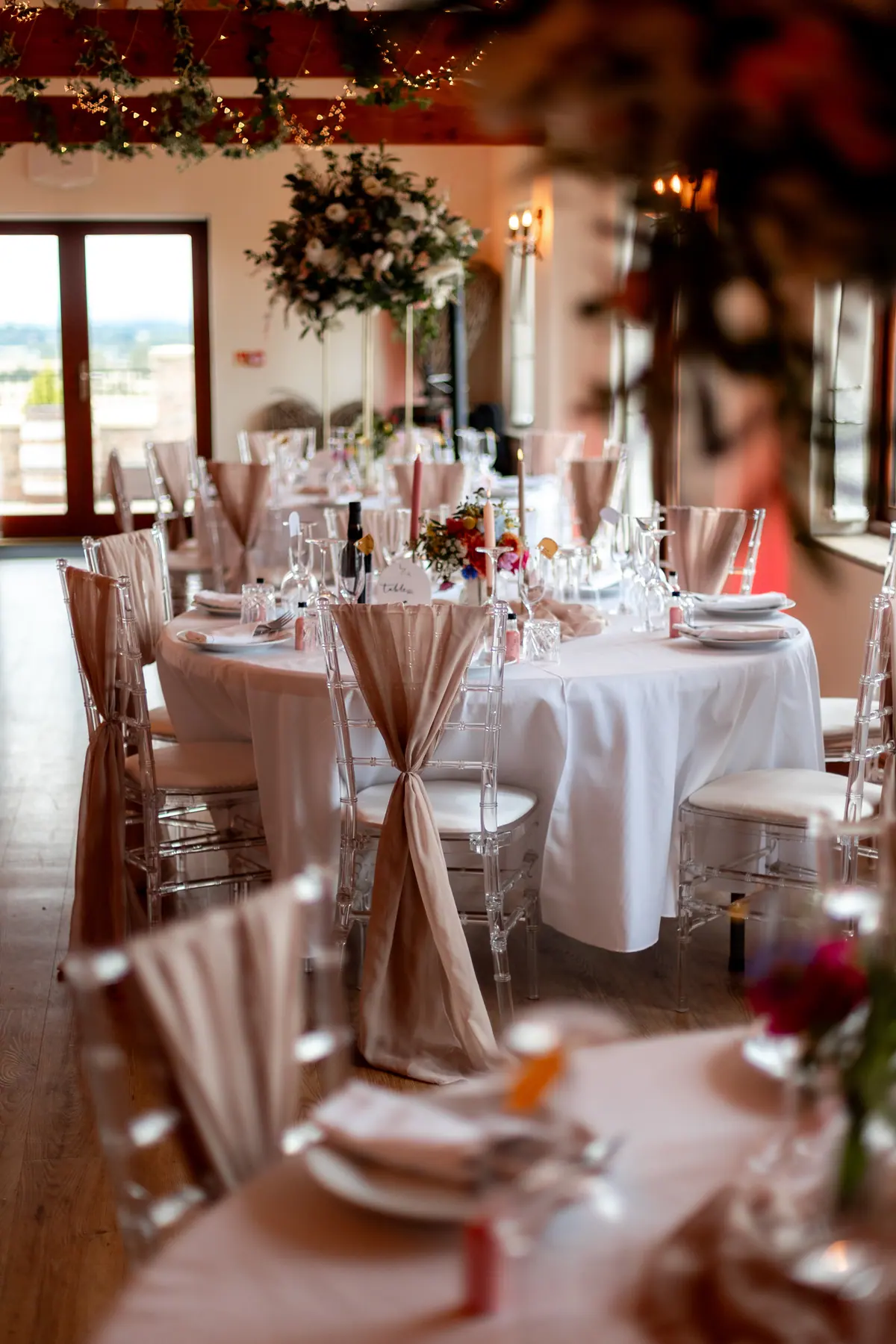
The Hall holds the wedding breakfast for up to 120 seated guests. Where the ceremony has taken place indoors, the room moves from its ceremony layout to the tables prepared for the meal. The change happens within the same wedding day and building, keeping the ceremony and dining in one space.
A typical Thief Hall day reaches the meal at around 5pm. The precise schedule can move, but the sequence stays recognisable: marriage first, then the couple's first shared meal afterwards.
Tables, chairs, linen, glasses and napkins are included with the venue. Five-foot round tables seat up to ten, while the six-foot by two-foot rectangular tables seat four on each side. The ghost chiavari chairs come with a choice of seat-pad colour, so the room plan can begin with the furniture already available rather than an assumed hire list.
The practical room plan also has to allow for the people serving and clearing the meal. The Hall may be dressed for the wedding breakfast, but the caterer and venue team still need clear routes between the kitchen, tables and glassware. That is one reason the service format and timings are best agreed together rather than as separate decisions.
WHAT TIME IS THE WEDDING BREAKFAST?
The example day reaches the table at about 5pm.
The time is not what makes the meal a wedding breakfast. At Thief Hall, the viewing pack's example day places it at about 5pm, after the ceremony, reception drinks, photographs and the guests taking their seats in the Hall. Another wedding can move that time and the meal still keeps the same name.
Guests take their seats before the couple enters. Thief Hall can act as MC and announce the couple into the room, or a guest chosen by the couple can take that role. This gives the room one clear handover from the reception into the meal without requiring the couple to appoint an outside master of ceremonies for the entrance.
The viewing pack places speeches at the start of this part of the day. It recommends three speeches at around ten minutes each. That gives roughly thirty minutes of speaking before the meal service is counted, while the wireless microphones already included with the venue support the people speaking.
The running order is therefore practical rather than ceremonial for its own sake: guests sit, the couple is announced, the speeches take place and the food follows. The venue can provide the announcement, or the couple can give that part to somebody they know.
Copies of the speeches are requested in advance. They help the coordinators understand the order and support the timing around the food service. The couple can still choose who speaks and in what order; sharing the copies simply gives the people running the room the information needed to connect the entrance, speeches and first course.
HOW LONG DOES IT TAKE?
Allow roughly an hour for each course.
For a served meal, Thief Hall asks couples to allow roughly one hour for each course. That hour covers the complete cycle: the course is served, guests eat, and the room is cleared before the next course begins. A three-course meal therefore occupies roughly three hours of the running order before any separate allowance for the entrance or speeches.
That guide is useful because service, eating and clearing all take place inside the same hour. Counting only the time guests spend eating would leave the caterer and venue team without the space needed to serve one course and clear it before the next arrives.
A buffet takes longer. The viewing pack plans for one table at a time, so the full room does not reach the food together. That service pattern needs more room in the schedule than a simple assumption that every guest begins at once.
The meal format and the running order belong together. A couple choosing three served courses can plan from the hour-per-course guide. A couple choosing a buffet can allow longer and account for each table being called in turn. In both cases, the timing starts with the service method rather than a generic finish time borrowed from another wedding.
That does not mean every course must feel rushed or that the couple must choose three courses. It means the schedule should acknowledge the full service cycle. If speeches, an entrance or another planned moment sits beside the meal, its time can be shown separately so the caterer, coordinators and MC are working from the same running order.
THE FOOD
Three courses, a buffet or sharing platters.
The couple chooses who prepares the food at Thief Hall. Caterers can use the venue kitchen, and food vans are welcome. That allows the wedding breakfast to take the form that suits the day while the term continues to describe its place in the celebration.
The viewing pack gives three courses, a buffet and sharing platters as examples. Thief Hall has no restricted caterer list, so the couple can choose both the people preparing the food and the style in which it reaches the tables.
Each format changes the practical plan. Three courses use the roughly one-hour cycle for each course. A buffet needs longer because tables are served one at a time. Sharing platters sit within the same freedom to choose the food, while their exact service plan belongs with the chosen caterer.
Breakfast here names a moment in the marriage rather than one fixed menu. It begins once the ceremony is complete and the newly married couple sits down to share a meal with their guests.
Evening food is a later part of the day, not another name for the wedding breakfast. The viewing pack places evening guests and night food at 7:30pm in its example running order. It notes that evening guests arrive hungry, and a food van can park at the back of the venue and serve into the lounge. That keeps the later food distinct from the first shared meal after the ceremony.